
“Standards Have Fallen”: Rashid Latif takes aim at Pakistan cricket’s fading stars


Former Pakistan cricketer Rashid Latif has delivered a blunt assessment of Pakistan cricket, warning that the standard of the national team and its leading players has steadily declined over the past two to three years, a slide he believes has now been exposed on the global stage.
In a detailed post on social media, Latif pointed to Pakistan’s current 7th-place ranking in T20 internationals, contrasting it with a period when Pakistan were ranked number one and regularly dominated top cricketing nations. According to Latif, recent events, particularly involving Pakistani players in overseas leagues have highlighted deeper structural and professional issues.
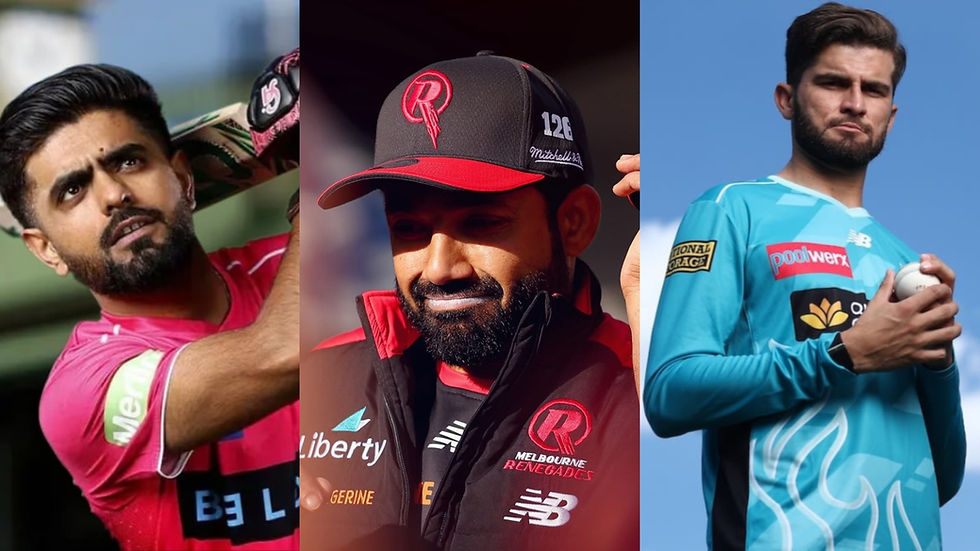
Latif cited Pakistan players’ stints in Australia’s Big Bash League (BBL) as a reality check. He referenced Mohammad Rizwan’s recall from the tournament due to a slow strike rate, Shaheen Shah Afridi failing to complete an over after bowling dangerous full tosses, and a moment involving Steve Smith refusing a single, which Latif interpreted as a lack of trust in the professional reliability of Pakistani players.
“Australia has set a benchmark,” Latif wrote, adding that sub-standard performance is not tolerated on Australian soil, regardless of reputation.
To underline the culture of professionalism, Latif compared the situation with Australian players’ treatment in the IPL. He highlighted Glenn Maxwell’s disastrous 2020 IPL, where the batter scored just 108 runs in 13 matches without hitting a single six. Rather than being shielded, Maxwell moved on, rebuilt his game, and bounced back strongly scoring 245 runs in six matches with 16 sixes soon after. For Latif, Maxwell’s resurgence reflects the mindset of elite professionals.
Turning his focus back to Pakistan, Latif acknowledged the stature of Babar Azam, Mohammad Rizwan, and Shaheen Afridi, calling them superstars of Pakistan and world cricket. However, he questioned whether they are now losing that status. He also criticized the Pakistan Cricket Board’s frequent captaincy changes, arguing that making each of them captain in turn put players under pressure and destabilized the team, from which it has yet to fully recover.

Latif also defended Haris Rauf, praising his raw ability and match-winning spells, while noting that public perception and management confidence remain divided, particularly after defeats such as the Asia Cup final, where fans blamed his bowling. Similarly, he mentioned Hasan Ali, whose form dipped after receiving a Category B central contract, eventually leading to his omission from the side.
Drawing a sharp contrast, Latif revisited Australia’s response to the 2018 ball-tampering scandal. While the ICC imposed relatively light penalties, Cricket Australia enforced year-long bans on Steve Smith and David Warner, along with leadership restrictions. Latif described these punishments as a defining lesson for future generations. He noted that both Smith and Warner returned stronger, later scoring centuries in the same match, and despite not playing international T20s regularly, remain among the world’s top T20 batters.
Latif concluded by listing Australia’s 25 world titles across men’s, women’s, junior, and Test cricket, presenting them as evidence of a system built on accountability, discipline, and high standards.
The underlying message of Latif’s “reality check” is clear: talent alone is no longer enough. Without professionalism, accountability, and long-term planning, Pakistan cricket risks falling further behind in a rapidly evolving global game.


Comments