
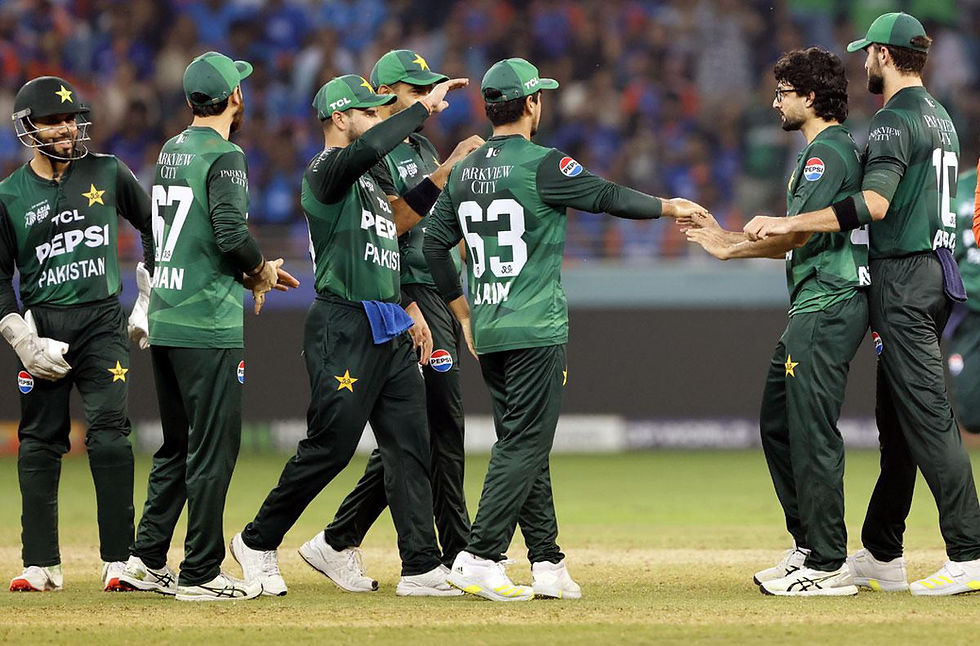
One week to go for the T20 World Cup but Pakistan’s batting still remains a question mark


With just one week remaining before the T20 World Cup, Pakistan cricket should ideally be settling combinations, locking roles, and building confidence. Instead, the conversation remains stuck where it has been for over a year: confusion in batting positions, unclear roles, and an unsettled top order.
The criticism directed at captain Salman Ali Agha may be loud, but it misses the real issue. This is not about one innings or one batting position. This is about continuous experimentation without direction, something Pakistan have been doing relentlessly for the past year and a half.
Floating Batting Order, Sinking Confidence
Modern T20 cricket demands clarity. Across the world, teams keep their top three fixed. Pakistan do the opposite. From opening slots to the middle order, positions keep floating, leaving batters unsure of their responsibilities.
The most questionable move remains the handling of Babar Azam. If Babar is in the team, logic dictates he should bat at number three, his most natural position. Pushing him down to number four while asking Salman Ali Agha to take number three goes against basic team balance. Flexibility suits Salman, not Babar. Salman can bat at 3, 4, or 5 — Babar cannot, and history proves that.
Salman Ali Agha has repeatedly shown he is a selfless captain, but leadership also means making hard, correct calls. Role clarity must come before personal flexibility.
Selection Calls That Raise Eyebrows
Pakistan’s batting problems are magnified by questionable selections. Fakhar Zaman, despite inconsistencies, brings intent — something this lineup desperately lacks. His brief glimpses in recent games were enough to remind why he remains a match-winner.
On the other hand, Usman Khan’s numbers raise serious concerns. An average of 18 after more than 30 international games in T20s is not just poor form — it is a sample size large enough to demand accountability. In comparison, someone like Mohammad Rizwan, even if he struggled in Australian conditions, remains a proven performer in Asian conditions.
Right now, Pakistan’s batting is stuck in an uncomfortable space — neither stable nor explosive, neither rebuilding nor fully trusted.
Bowling Carrying the Load — Again
If Pakistan are winning games, it is not because of their batting. It is their bowling — especially spin — that continues to rescue them. Abrar Ahmed’s impact in the recent match changed the game instantly, breaking Australia’s momentum when they were cruising.
The spin department looks increasingly promising, and smart rotation — involving players like Shadab Khan, Usman Tariq, and Sufiyan Muqeem — could give Pakistan a genuine edge in Asian conditions. The argument against playing too many fast bowlers in such conditions also holds weight, especially when players like Faheem Ashraf offer both control and batting depth.
Time Is the Biggest Enemy
Calling opposition sides “C teams” or “D teams” misses the point. Pakistan are not being tested by labels; they are being tested by their own lack of clarity. The real concern is not who Australia are missing — it is who Pakistan still haven’t figured out.
With the World Cup days away, experimentation must stop. Roles must be defined, the top order must be settled, and selections must reward impact, not hope.
Because talent alone does not win World Cups. Planning does. And right now, Pakistan’s batting looks like a plan still under construction — with the deadline dangerously close.


Comments